

The day rarely ends abruptly. It usually glides into the night via one last email, a quick scroll and a late light in the bathroom. It is precisely in this phase that it is often decided whether the body can really shut down - or whether you will lie awake for hours even though you are tired.
The last 60 minutes before bed are therefore not a detail, but rather one of the most effective levers for better recovery. Those who consciously design them not only improve the ability to fall asleep, but often also improve the quality of sleep, mood and performance the next day.
Why the last hour is so important
Your body needs transitions. During the day you are in a more active mode: cortisol, light, stimuli, decisions. At night, melatonin should increase, heart rate and body temperature should decrease, and the mind should calm down. When this transition is missing, the nervous system stays awake longer - even when you feel physically exhausted.
A good evening routine is therefore less a “wellness ritual” than a biologically sensible end to the day.
Step 1: Reduce stimuli
Start by actively making the last hour quieter. This doesn't mean doing everything perfectly from now on, but rather targeted reductions:
- Limit or dim screen time
- Avoid loud noise and bright overhead lights
- No more emotionally upsetting conversations or messages
- Clear your mind of open to-dos – e.g. B. with a short list for tomorrow
Just 30 to 60 minutes of less visual and mental overstimulation can make the process of falling asleep noticeably easier.
Step 2: Control light
Light is one of the strongest drivers of your sleep-wake cycle. Blue, bright light in the evening signals to the brain: day. Warm, muted light, on the other hand, helps you prepare for the night.
Practical ideas:
- Warm bedside light instead of ceiling floodlights
- Reduce your cell phone brightness at least an hour before going to sleep
- If necessary, use blue light glasses in the last hours of the evening
Anyone who works a lot on a screen in the evening particularly benefits from consciously managing light - not just when it's difficult to fall asleep.
Step 3: Calm the body
Recovery is not just mental, but also physical. A simple evening routine for the body can make the transition to sleep much easier:
- Warm shower or short bath
- Light stretching or breathing exercises
- A quiet walk after dinner
- Comfortable clothing and a cool, dark sleeping area
Regularity is important. The body learns when it's time to sleep through repetition.
Step 4: Don't forget to breathe
Many people only realize late that they have difficulty breathing through their nose in the evening or at night. Then breathing becomes shallower, sleep becomes more restless, and the mouth becomes dry in the morning. A clear nasal passage is therefore an underestimated part of a good night.
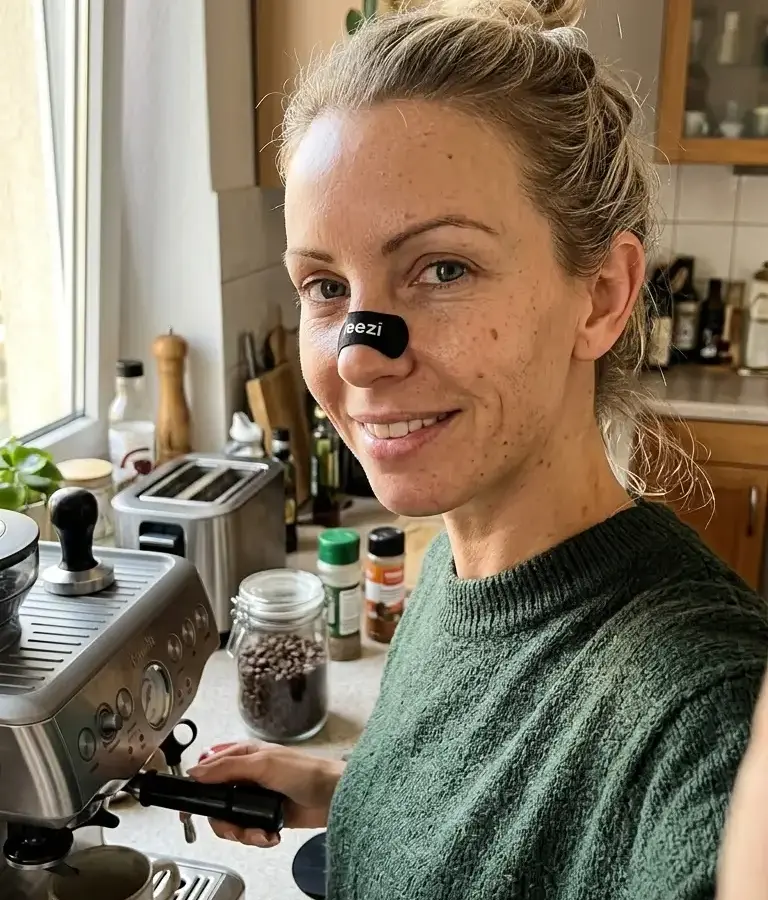
A mechanical nasal plaster can gently pull the nostrils outwards and thus support nasal breathing - without any active ingredients, purely through the shape of the plaster. For many, this is a small but noticeable component in their evening routine.
Step 5: The right time to go to bed
It's not just the routine itself that counts, but also the timing. If you regularly go to bed much later than your body actually needs, you are shifting your rhythm. Therefore try:
- Keep similar bedtimes – even on weekends
- Avoid late caffeine
- Eating heavy meals at least two to three hours before bed
Consistency often works more powerfully than any single “sleep hack” measure.
Melatonin – useful or overrated?
Melatonin is often discussed, especially when it comes to problems falling asleep. According to EFSA, melatonin can help shorten the time it takes to fall asleep if taken in the right amount just before bed. However, it does not replace a good evening routine.
Think of melatonin as a supplement - not as a replacement for light management, stimulus reduction and regular sleep times.
Your 60-minute checklist
If you want to start tonight, try this simple structure:
- 60 minutes before: Dim screens, write to-do lists
- 45 minutes before: Warm light, no more intensive work
- 30 minutes before: Shower, light stretching or breathing exercises
- 15 minutes before: Prepare your bedroom, put your cell phone away
- Right before sleeping: Calm breathing, if necessary nasal plasters or other firmly established aids
Conclusion
The last 60 minutes are not a luxury - they are the moment when your body understands that the day is over. If you design this phase consciously, you will lay the foundation for better sleep, more recovery and a clearer start to the next day.