

Mouth breathing at night is more than a detail. Anyone who constantly breathes through their mouth often wakes up with a dry throat, is more likely to snore and feels less rested. The cause is often - but not always - a nose that doesn't let in enough air at night.
What happens when you breathe through your mouth?
The nose filters, humidifies and warms the air. If it fails, untreated room air flows through the mouth:
- Mucous membranes dry out
- Throat scratches in the morning
- Snoring noises may increase
- Sleep seems more superficial
More basics: Why nasal breathing is more important than you think.
Why the nose becomes “tight” at night
Colds, allergies, dry air, lying position - all topics that we are concerned with Nose blocked at night and Allergy sufferers deepen. When the nose is blocked, the body switches to breathing through the mouth - often unconsciously.
What nasal plasters can do - and what they can't
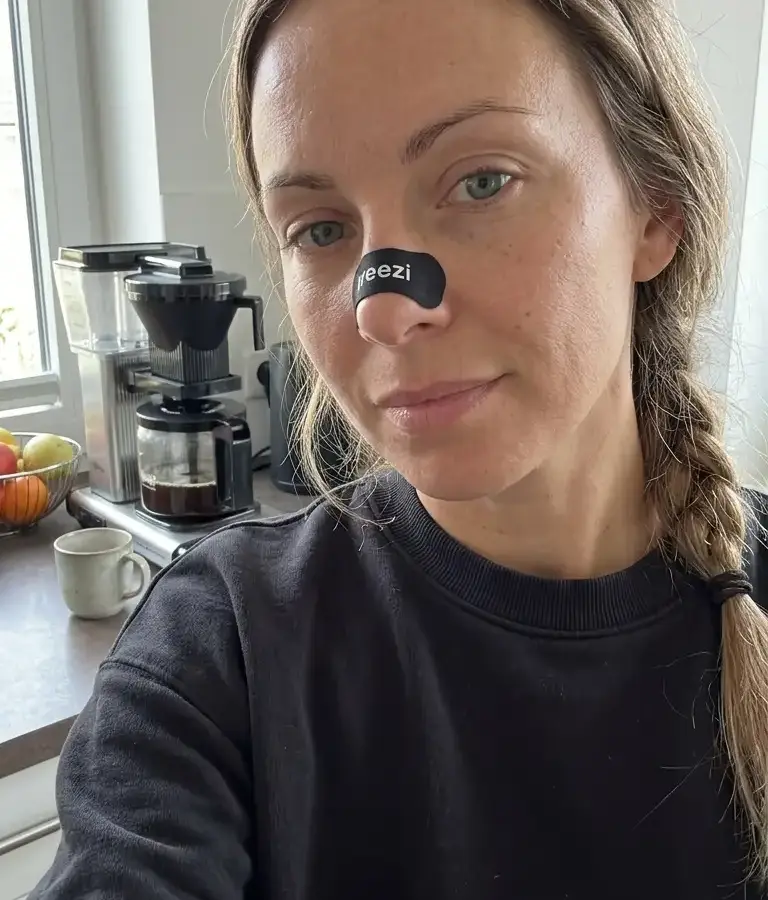
A nasal plaster forces Don't let yourself breathe through your nose. It eases them by lifting the nostrils. For many people, this is enough to allow them to breathe through their nose longer at night - especially if the blockage is mechanical and narrow, not deep anatomical.
It is not a substitute for treatment for sleep apnea or severe respiratory diseases.
Practical routine against mouth breathing
- Treat constipation (allergy, indoor climate, cold)
- Test side position
- Breezi Premium nasal plasters in the evening routine
- If snoring persists: Snoring articles read
COMMON QUESTIONS
Can I stop mouth breathing completely?
Not always - but more nasal air often reduces the proportion.
Are mouth tapes an alternative?
Separate topic – discuss only with caution and in the absence of respiratory diseases.
Does Breezi help children?
Pay attention to product information and age recommendations; Pediatric evaluation of children with breathing problems.