

We breathe around 20,000 times a day - mostly without thinking about it. But whether the air goes through the nose or through the mouth makes a big difference to energy, sleep, concentration and recovery.
Nose breathing is therefore much more than a detail. It is a central component of how well your body functions in everyday life - and how capable or calm your nervous system remains.
What the nose does - and the mouth doesn't
The nose is not a simple air duct, but a highly specialized filter system. When you breathe through your nose, the following happens:
- The air is filtered and purified
- Dust, pollen and germs are retained
- The air is humidified and brought to body temperature
- Nitric oxide from the sinuses can aid oxygen absorption
Breathing through your mouth eliminates much of this preparation. The air we breathe is often drier, more uncontrolled and can contribute to restless sleep, especially at night.
Nasal breathing and sleep
Many people fall asleep without realizing that they breathe more through their mouth at night. Typical signs are:
- dry mouth in the morning
- waking up more often
- a feeling of restless sleep
- Snoring or louder breathing
A clear nasal entrance is therefore not only comfortable, but often crucial for restful sleep. If your nose is slightly narrowed at night, even a little mechanical support can help make breathing calmer and more regular again.
Why athletes consciously breathe through their nose
Nasal breathing also plays a role in sports. It can help stabilize breathing rhythms and improve feelings of control - especially during moderate exercise, running or quieter training sessions.
Many athletes therefore specifically use nasal breathing to:
- not to increase your pulse unnecessarily
- to breathe more calmly and efficiently
- to get a signal for overload sooner
At high intensity, mouth breathing is normal and often unavoidable. For many units, however, an open nasal entrance is enough to remain controlled through the nose for longer.
Stress, focus and breathing rhythm
Breathing and the nervous system are closely related. Shallow, rapid breathing can increase stress. Calm nasal breathing, on the other hand, often has a calming and structuring effect - which is why it is an integral part of many breathing and relaxation techniques.
If you notice that you are becoming restless during the day, it is worth a quick check:
- Am I breathing through my mouth right now?
- Are my breaths shallow or deep?
- Can I consciously breathe in and out through my nose for 10 breaths?
Often that's exactly enough to bring the body back down a bit.
What a nasal plaster does mechanically
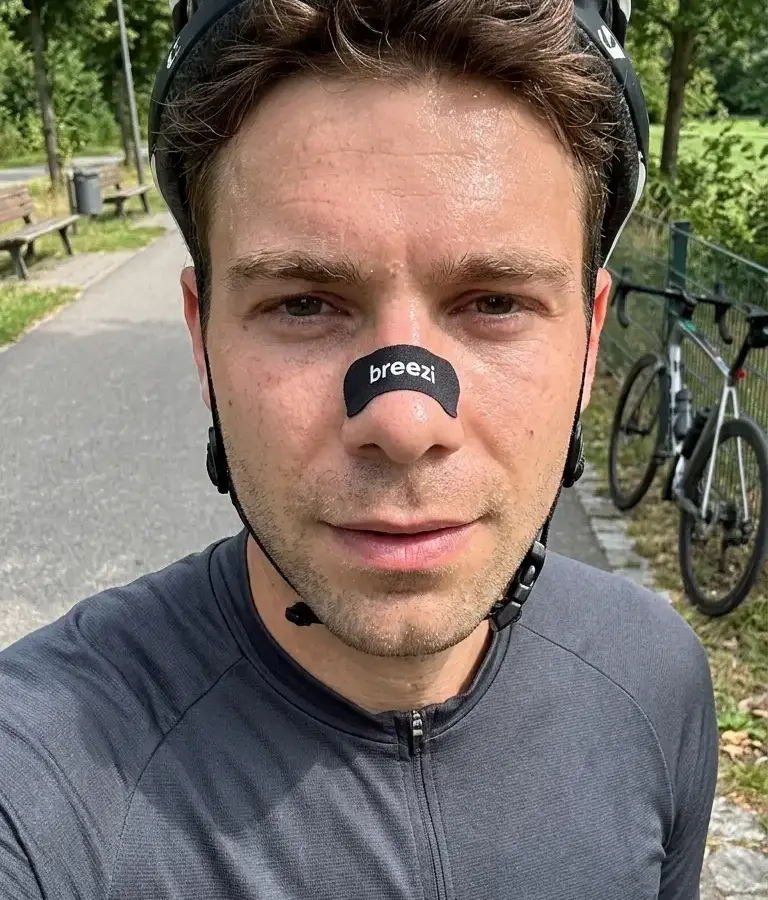
A mechanical nasal plaster like Breezi pulls the nostrils slightly outwards. This allows the nasal entrance to remain more open - without any active ingredients or chemical stimuli. The effect is immediately visible and noticeable as soon as the plaster sits correctly.
This is particularly interesting for people who:
- breathing harder through your nose at night
- want more control over their breathing when exercising
- want to be supported during the day with stress and concentration
When you should seek medical advice
Nasal breathing can often be well supported - but it is not a substitute for medical evaluation. If you have persistent severe constipation, regularly experience extreme tiredness during the day, or suspect signs of sleep apnea, you should seek medical advice.
A nasal plaster can be a useful component, but not a solution for every cause of breathing or sleeping problems.
Read more: Nasal plasters for allergy sufferers · Mouth breathing at night · Nasal plasters against snoring
Nose breathing as part of your Breezi routine
Recovery rarely comes from a single product. It comes from repeatable routines: better light in the evening, calmer transitions, conscious breathing and products that support you in everyday life instead of complicating it.
Nasal breathing is one of the simplest and most effective levers. Anyone who understands and supports them in a targeted manner will not invest in a trendy topic - but in better rest, clearer focus and a more peaceful sleep.